The Human Warrant Series
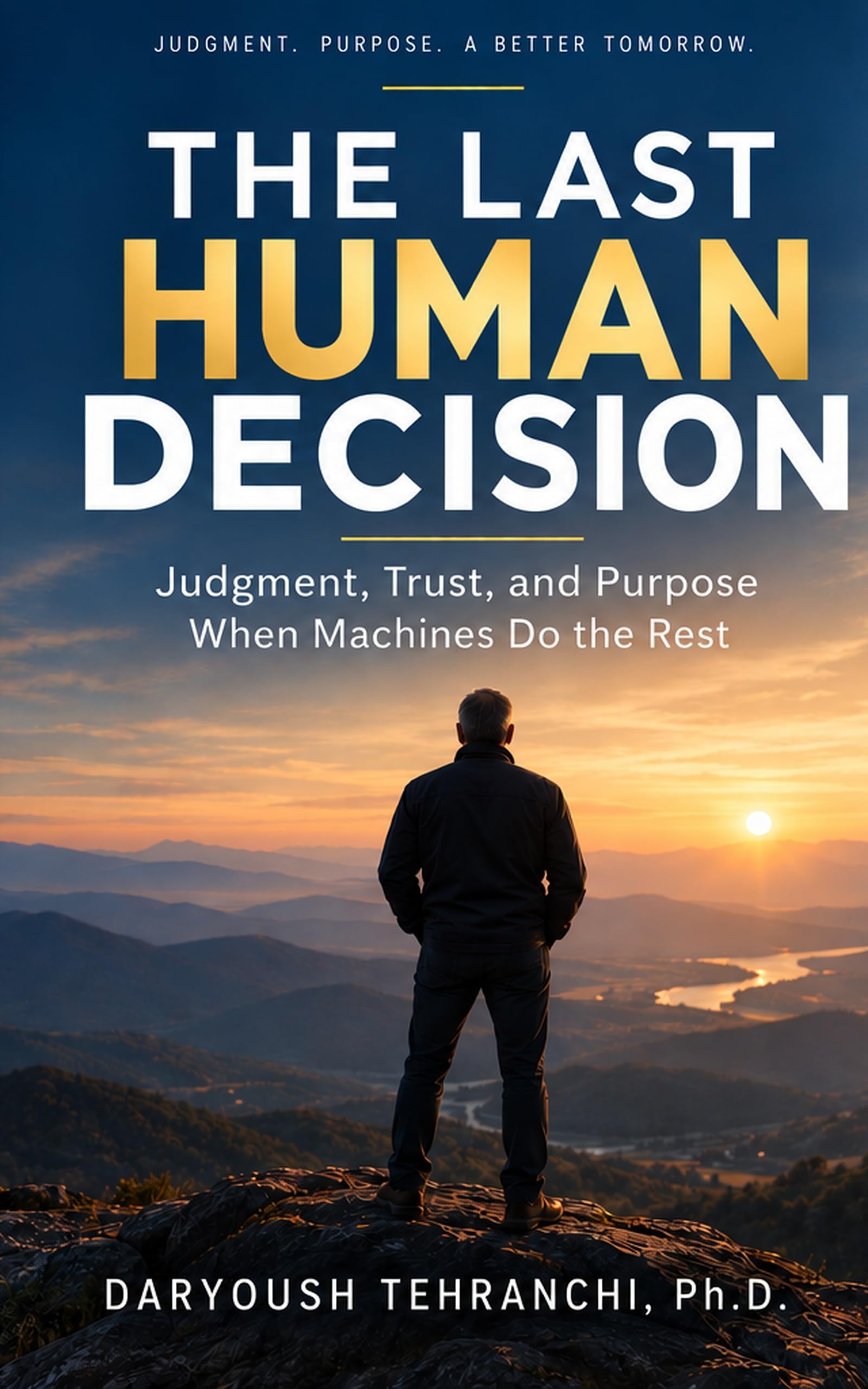
The Last Human Decision
Judgment, Trust, and Purpose When Machines Do the Rest
Judgment, trust, and purpose — the human capacities that stay valuable no matter how good the machines get.
About the book
The part of the work that doesn’t automate.
There is a moment — you may have already had it — when the tool does in minutes what used to take your best engineer a week, and the room goes quiet around a question nobody says out loud: what am I actually for now?
Dr. Daryoush Tehranchi spent four decades making consequential decisions on complex technical programs — leading organizations, chairing review boards, and living with the outcomes when hard calls went wrong. In The Last Human Decision, he writes down what that practice taught him about the part of the work that doesn’t automate: judgment, the instinct for the right question, wisdom, trust, purpose.
This is not a book about AI tools, and not a book about resisting them. It is a book about the human capacities that hold steady underneath whatever the technology happens to look like — and about developing them deliberately, in your work, your career, and the rest of your life, before the moment you need them arrives. Part career memoir, part field guide, it is written for people who are good at what they do and can feel the ground shifting under it.
Key takeaways
Six ideas worth keeping.
Takeaway 01
Judgment has three ingredients, and only one of them is being automated.
Judgment is pattern recognition, values clarity, and stakes-awareness — three separate things that rarely develop evenly. AI is getting better at pattern recognition by the month, but values clarity isn’t reducible to a dataset: a model does not own the consequences, and that consequence-living is what gives the knowledge its weight. (Chapter 1)
Takeaway 02
Answers are getting cheap. Questions aren’t.
A well-posed question handed to a good AI system now produces a competent answer faster and more cheaply than at almost any point before. What hasn’t gotten cheap is the step before that: deciding which question is worth answering. The scarce, rising-value skill is noticing whether the question in front of you is the right one — and having the standing and the nerve to say so. (Chapter 2)
Takeaway 03
Wisdom isn’t more information. It’s knowing which information is load-bearing.
Wisdom is calibrated judgment about which information is load-bearing for a decision and which is true but irrelevant. Capable people increasingly fall into analysis without weighting — treating every gathered fact as equally important because they have no principled way to rank it. Name the two or three considerations that would actually change your decision before you look at anything else. (Chapter 4)
Takeaway 04
Trust is a structure with three separate parts — and it has to be built before it’s needed.
Reliability, competence, intent: most trust failures come from misdiagnosing which of the three is actually missing, and trying to fix it with more of a different one. Working harder can’t repair a doubt about intent, and more competence can’t fix unreliable follow-through. As AI thins the visible evidence people use to judge each other, the deliberate work of building trust matters more now, not less. (Chapter 5)
Takeaway 05
The second half of a career runs on a different skill.
Early-career value comes from building; the later years run on curating — being more valuable for the judgment you apply to other people’s work than for what you produce yourself. The honest test before reacting to someone else’s answer: ask whether your objection is about the work, or about the fact that it isn’t yours. (Chapter 10)
Takeaway 06
Purpose isn’t the reward you earn at the end. It’s the architecture-level decision that comes first.
A colleague reached the chief-engineer role he’d spent thirty years chasing and felt strangely empty — he had optimized relentlessly for getting there but never once optimized for what “there” was supposed to accomplish. Purpose is not the prize for good decisions; it is the thing every other decision is supposed to be in service of. (Chapter 9)
Who it’s for
For anyone wondering what they’re for now.
Questions
Before you ask.
Is this a book about AI?
AI is why this argument is urgent right now, but it was never going to be the subject of it. This is not a guide to using AI tools — no prompts, no workflows, nothing that expires when the tools change. It’s about the human capacities that stay valuable underneath whatever the tools happen to look like: judgment, the instinct for the right question, wisdom, trust, purpose.
I’m not an engineer. Will it speak to me?
Yes. This is the broadest-audience book in the author’s catalog. His lens is four decades of engineering and leadership, but the questions — which decisions deserve your full weight, how to build trust deliberately, what you’re actually optimizing for — are questions of career and life, not of any one profession.
Is this a self-help or mindfulness book?
No. The author says it directly: he is not a psychologist, has no training in wellbeing, and this is not about habits, mindfulness, or how to sleep better. It is a practitioner’s account of judgment — making consequential decisions with incomplete information, being wrong in front of people, and learning to tell a defensible decision from a lucky one.
Do I have to read it in order?
No. The chapters build on one argument, but each stands on its own — jump to the chapter that speaks to the question you’re wrestling with. The author asks only one thing: don’t skip to the closing chapter first. It lands differently after the rest of the argument has had room to build.
How does this relate to his other books?
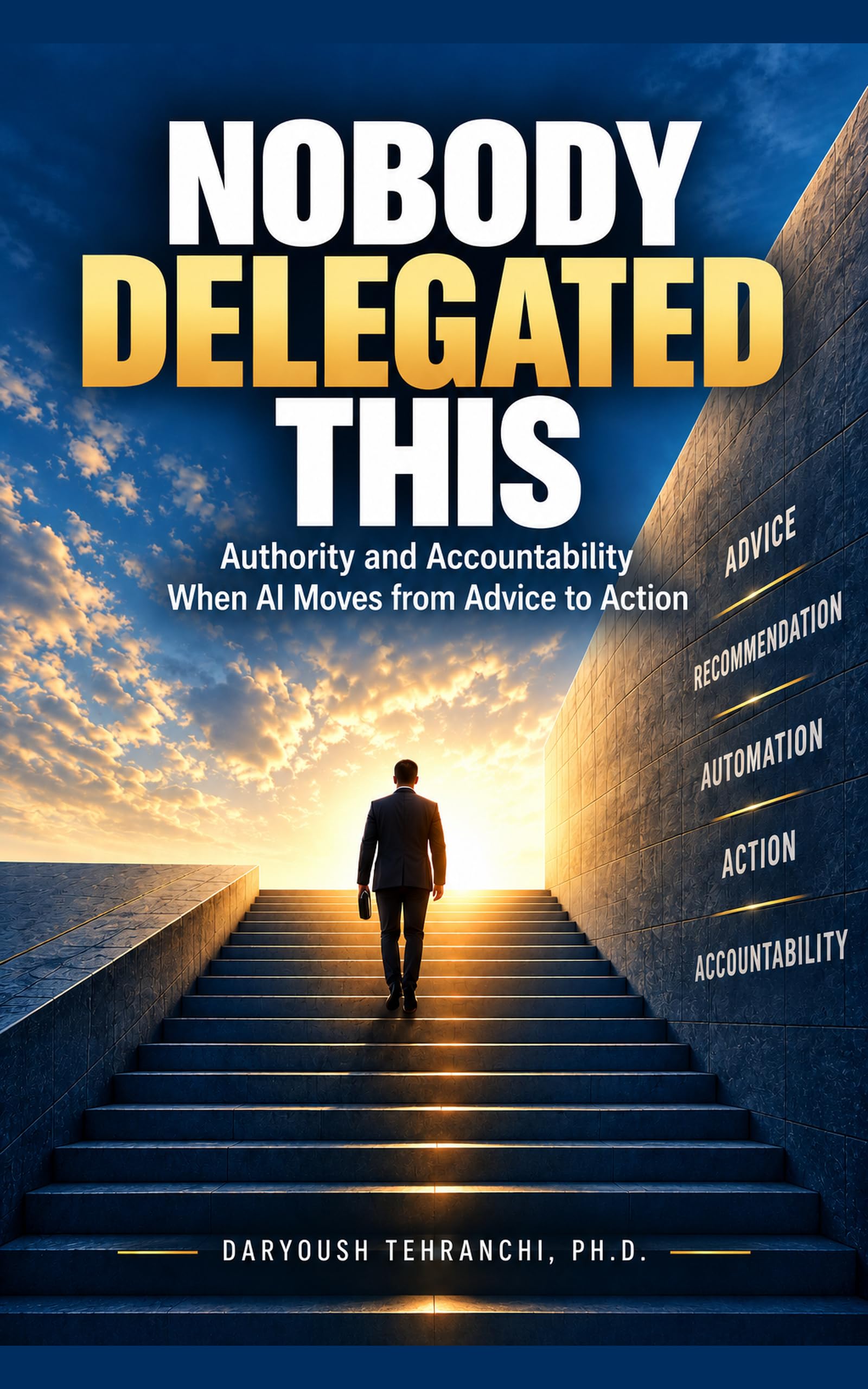
This is the personal, reflective book — one of four titles in The Human Warrant Series, alongside Nobody Delegated This, Tested, Not Trusted, and Too Good, Too Soon. The playbooks are the practitioner’s shelf; this one is the book about the person doing the practicing.

The author
Dr. Daryoush Tehranchi is an engineer, architect, educator, and author whose work focuses on complex systems, systems and software architecture, digital engineering, artificial intelligence, technical leadership, and the decisions that remain fundamentally human.
The Human Warrant Series
More from the series.
Connect with Daryoush